1. HEADER (Logo Placeholder + Nav)
Dubai, Abu Dhabi & Sharjah

AC Gas Leak & Copper Pipe Repair in Dubai

AC losing gas, freezing up or dripping through the ceiling? Refrigerant operates in a closed loop and does not get consumed. A top-up without repairing the leak simply wastes money. We pressure test with dry nitrogen, braze the leak, and recharge by weight.

Leak testing from AED 150. Joint repair from AED 180. Insulation from AED 45/m.
24/7 Booking Same-day visits
Tested First Cheap parts checked
Written Quote No surprise bills
Genuine Parts OEM standard fit
Direct Cost Breakdown

How much does AC gas leak repair cost in Dubai?

From our rates, leak detection with an electronic sniffer and dry nitrogen pressure test starts at AED 150. A flare joint re-flare and seal starts at AED 180, a silver-brazed joint repair starts at AED 250, and a complete 5-meter split AC line set replacement starts at AED 650. Gas recharge with deep vacuum starts at AED 280.

AED 150 Leak Detection Test
AED 180 Flare Joint Re-do
AED 250 Silver Brazed Joint
AED 650 5m Line Set Replacement
Diagnose Your Issue

Common Faults We Inspect & Resolve

Identify what you see, hear, or smell. Starting rates shown; exact written quote confirmed on-site following diagnostics.

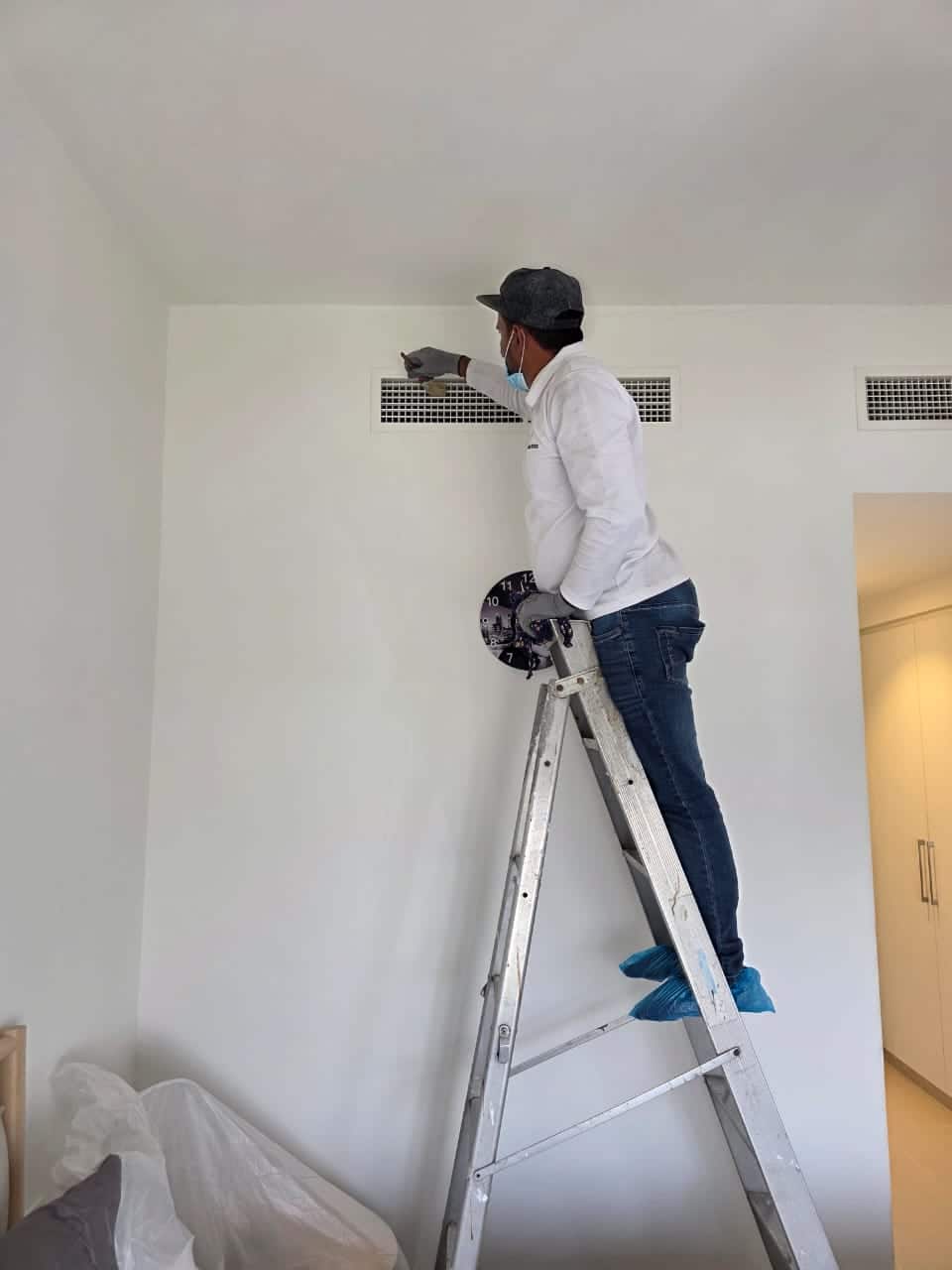
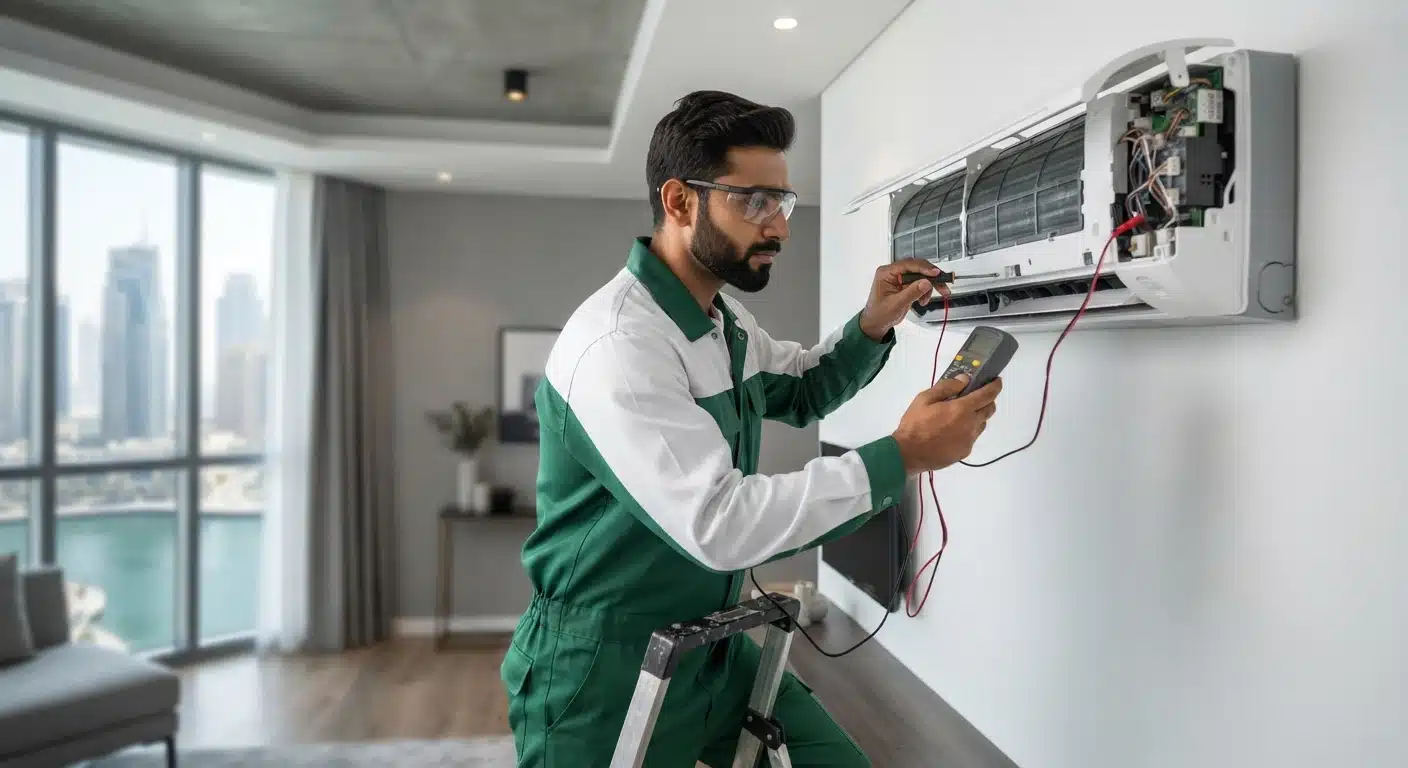
Technician checking an AC flare nut for a gas leak with a sniffer
Flare Joints

Flare nut and brass fitting leaks

Refrigerant seeping at indoor flare connections or outdoor service valves, often accompanied by an oily film.

Likely Cause: Thermal cycling and vibration crack brittle copper flares or over-torqued brass nuts.
Our Fix: Re-cut and eccentric re-flare the copper tube, install new forged brass nuts, seal and pressure test.
Silver brazing an AC copper pipe repair under nitrogen in Dubai
Vibration Fatigue

Cracks near the compressor loop

Audible hissing on the suction or discharge lines near the rooftop condensing unit.

Likely Cause: Continuous compressor vibration work-hardens copper tubing until fatigue fractures develop.
Our Fix: Cut out damaged section, silver-braze new copper with a vibration dampening loop under nitrogen purge.
Evaporator coil frozen with ice because of low refrigerant
Ice Buildup

Frozen coil or frosted suction line

The indoor evaporator coil turns into a block of solid ice and airflow drops to lukewarm.

Likely Cause: Low refrigerant pressure drops the evaporating temperature below freezing, accumulating moisture as ice.
Our Fix: Locate leak point, braze repair, deep vacuum below 500 microns, and recharge gas by weight.
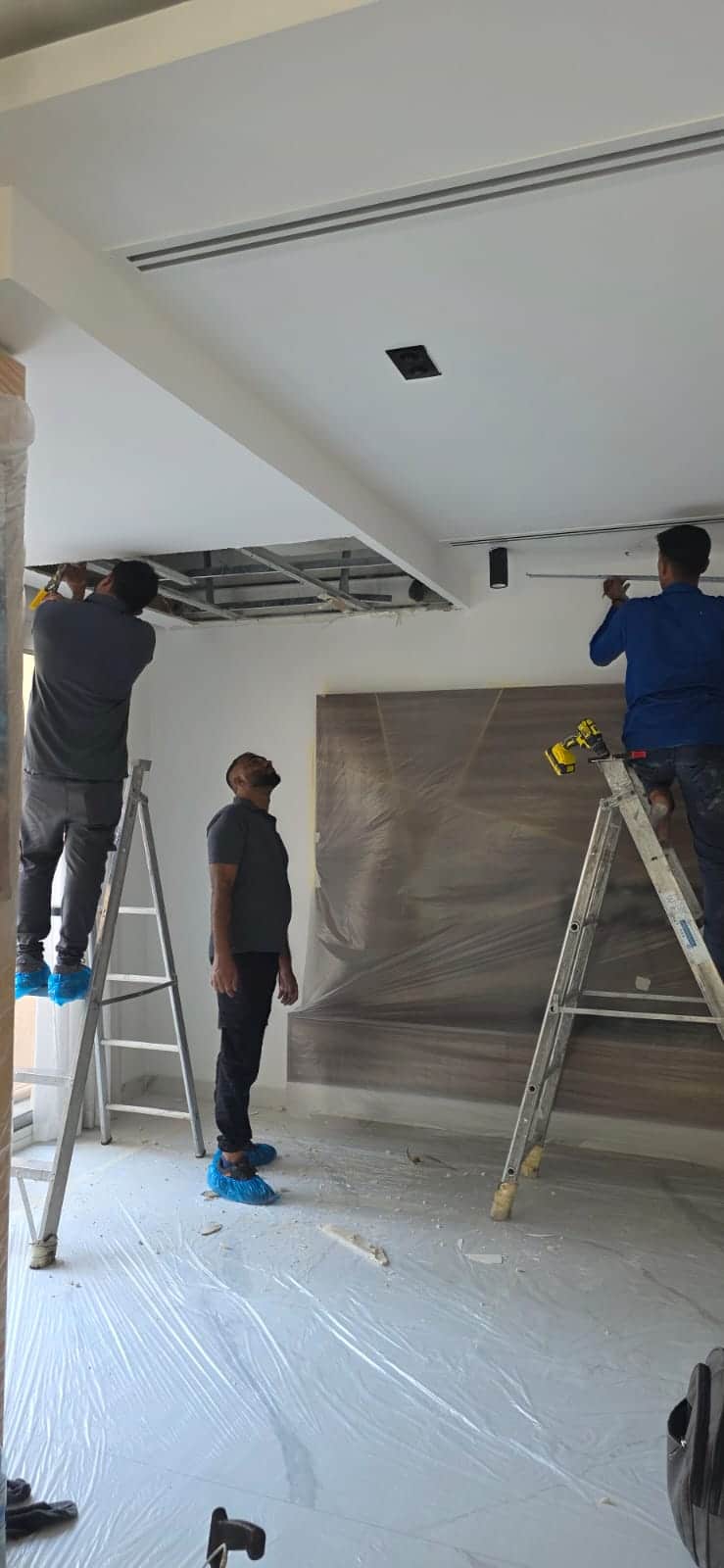
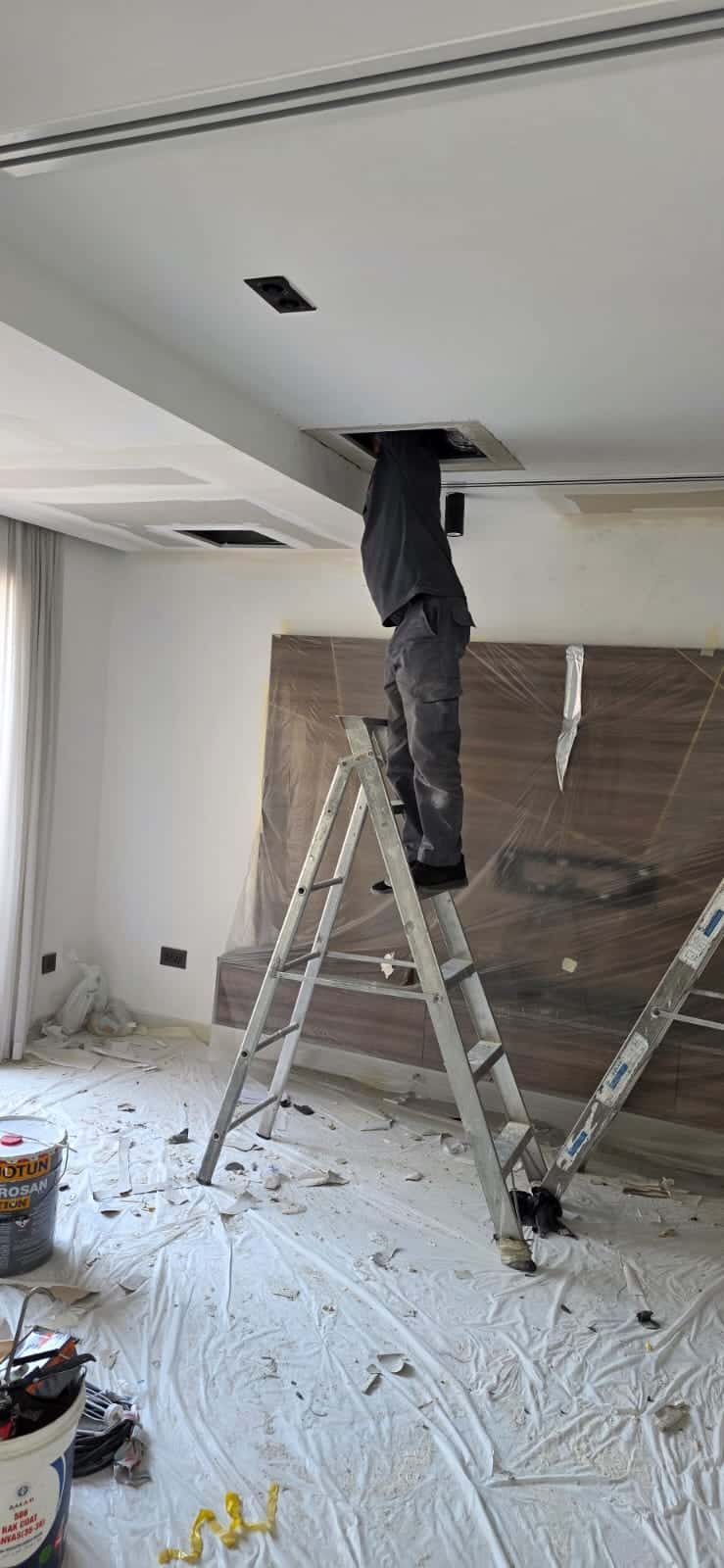
Nitrogen pressure hold test on a concealed AC copper line
Concealed Leaks

Leaks inside false ceilings or shafts

Persistent refrigerant loss with no visible oil in the living area, often following drywall works.

Likely Cause: Copper tubing pierced by ceiling screw fixings or chafed against sharp metal framing studs.
Our Fix: Isolate line set, nitrogen pressure hold test, localized access opening, and re-sleeving.
Closed-cell pipe insulation wrapped on rooftop AC copper lines
Condensation Sweat

Torn or decayed pipe insulation

Bare cold copper sweating condensation water onto gypsum ceiling boards, causing damp stains.

Likely Cause: Intense rooftop UV degrades standard rubber foam within 2 seasons, exposing cold suction lines.
Our Fix: Strip damaged insulation and apply heavy-duty closed-cell elastomeric insulation sealed with UV tape.
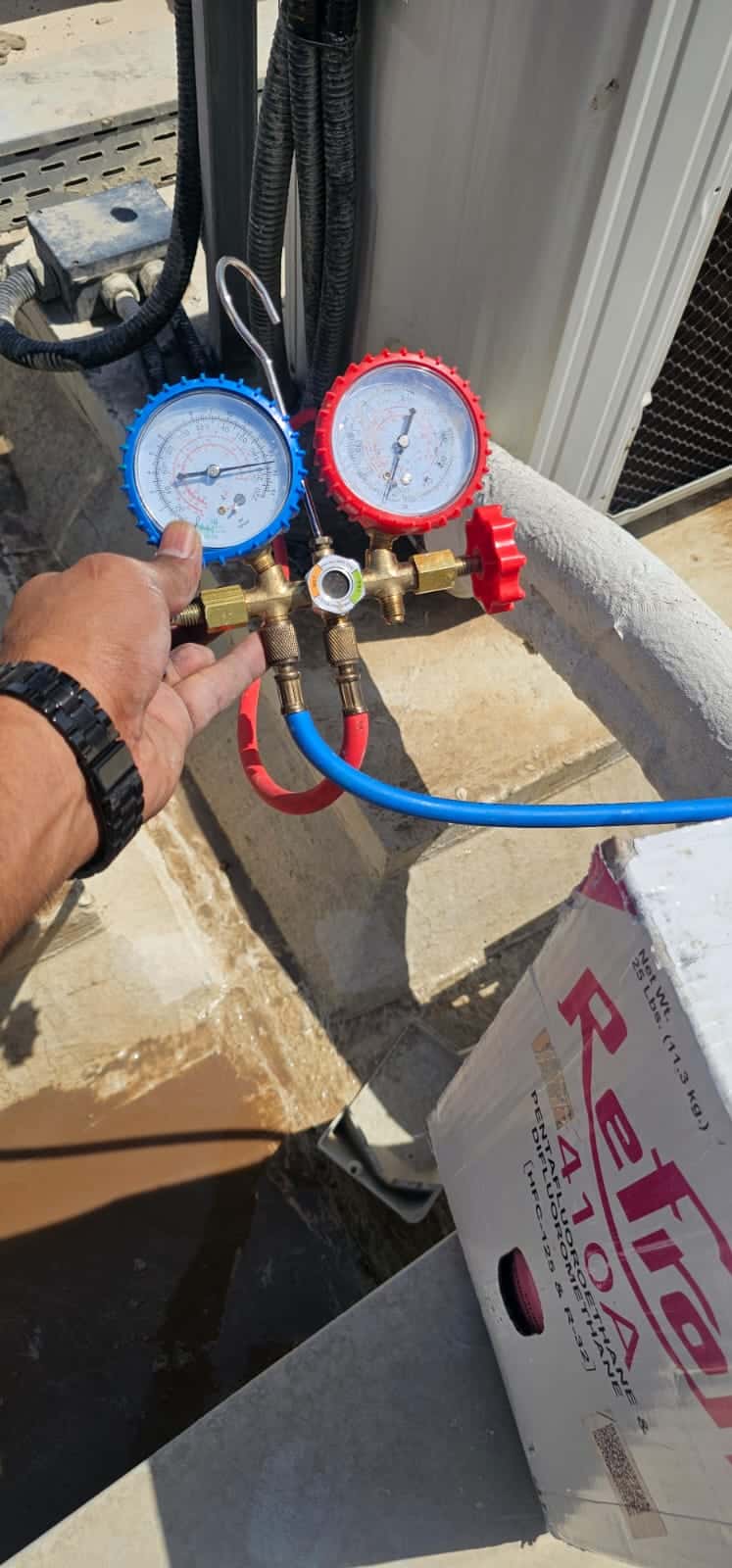
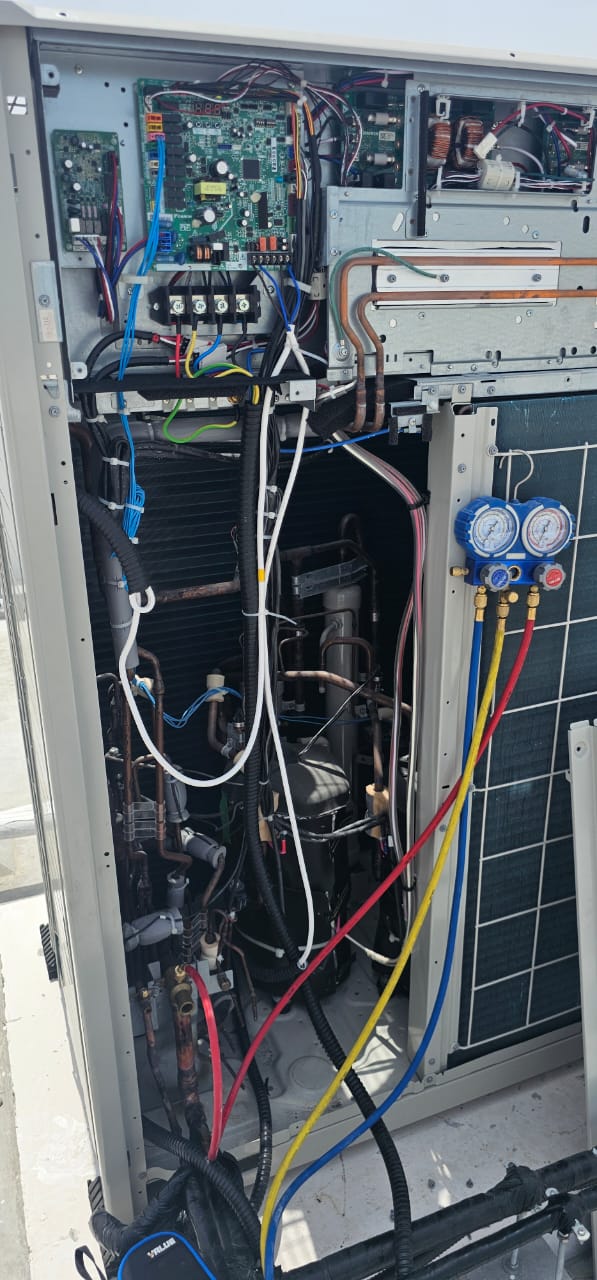
Deep vacuum on an AC line set with a digital micron gauge
Post-Repair Blockage

Cooling drop after improper brazing

System fails or overheats shortly after a previous brazing repair performed by another company.

Likely Cause: Brazing without dry nitrogen purges causes black copper oxide scale inside lines, clogging expansion valves.
Our Fix: Nitrogen flush circuit, replace clogged filter-drier, pull deep vacuum, and recharge refrigerant.
Simple Workflow

How It Works: 4 Clean Steps

From your initial message to verified repair with zero unexpected costs.

1

Locate the Leak

Electronic heated-diode sniffer scan and soap bubble test first, followed by nitrogen pressure isolation.

2

Written Quote

You see the exact leak location and receive an upfront price for repair or line section replacement.

3

Braze & Insulate

Damaged tube cut out and silver-brazed under active nitrogen purge. High-density closed-cell insulation fitted.

4

Vacuum & Weigh In

Two-stage vacuum pulled below 500 microns to remove moisture, followed by factory-spec refrigerant recharge by weight.

Clear Rates

Transparent Dubai Pricing

Clear starting rates in AED. Written quotes provided on-site before any hands touch your equipment.

Minor Fitting Fix

Leak Detection & Flare Re-do

Targeted service for accessible flare connections, service valves, and minor joint leaks.

Starting Price
From AED 150
  • Electronic sniffer leak detection & soap test
  • Nitrogen pressure isolation test
  • Eccentric re-flaring & forged brass nut replacement
  • Service valve O-ring replacement & pressure check
Major Overhaul

Complete Line Set & Recharge

Full line set replacement for corroded, ceiling-damaged, or undersized copper runs.

Starting Price
From AED 650
  • Up to 5m refrigeration-grade copper tube (ASTM B280)
  • UV-resistant closed-cell elastomeric insulation
  • Deep vacuum evacuation below 500 microns
  • Full refrigerant recharge by weight (R410A / R32)
Pricing Transparency: Final price depends on equipment brand, model, and physical accessibility. You receive a firm written quote before work begins. No hidden call-out surprises.
Technical Expertise

How we find an AC gas leak you cannot see

Rigorous diagnostic protocols that separate cheap component fixes from major replacements.

1. Visual & Soap Bubble Test

Compressor lubricating oil circulates with refrigerant. Where gas leaks, oil residue collects. We apply micro-bubble soap solutions to suspected flare nuts and service ports to pinpoint bubbling leaks.

2. Electronic Sniffer Detection

A heated-diode electronic sniffer detects halogenated refrigerant concentrations down to 3 grams per year, identifying micro-leaks in indoor cooling coils and tight service access areas.

3. Dry Nitrogen Pressure Hold Test

Lines are isolated and pressurized with dry nitrogen to 350 PSI. Digital pressure manifold gauges monitor pressure decay over 45 minutes to confirm whether lines are 100% airtight.

4. UV Fluorescent Dye Trace

For microscopic or intermittent leaks deep within wall shafts, specialized UV dye is injected into the refrigerant stream and inspected with high-output ultraviolet light.

Why AC copper lines leak in Dubai

Extreme rooftop temperatures cause severe thermal expansion and contraction cycles on copper tubing every day. Unclamped lines and rooftop compressor vibrations work-harden soft copper until stress fractures appear. We install refrigeration-grade ASTM B280 seamless copper tube engineered to withstand high working pressures of R410A and R32 systems.

Equipment & Brands We Regularly Service
R410A R32 R134a R407C Split AC Ducted AC VRV / VRF Systems Daikin LG Carrier Mitsubishi O General Gree
Coverage

Service Across Dubai, Abu Dhabi & Sharjah

Our rapid-response mobile units operate throughout Dubai communities, equipped with diagnostic tools, recovery equipment, and standard OEM replacement components.

Dubai Marina & JBR Downtown & Business Bay Palm Jumeirah Arabian Ranches 1, 2 & 3 JVC & JVT DAMAC Hills & Mudon Al Barsha & Barsha Heights Mirdif Motor City & Sports City Jumeirah Lake Towers (JLT) Dubai Silicon Oasis (DSO) Deira & Bur Dubai
Check Dispatch to Your Area
Got Questions?

Frequently Asked Questions

Everything you need to know about testing, pricing, and on-site repair procedures.

Why is my AC blowing warm air with ice on the pipe? +

Ice on the copper suction line or indoor evaporator coil is a classic symptom of low refrigerant caused by a leak. Lower pressure forces the coil temperature below 0°C, causing atmospheric moisture to freeze. Turning the unit off thaws the ice but leaves the physical leak unaddressed.

Can a copper pipe leak be repaired, or does the whole line set need replacing? +

In the vast majority of cases, the leaking section can be cut out and repaired on-site using silver brazing without replacing the entire line set. Full line set replacement is only recommended when tubing has widespread corrosion or internal contamination.

Why does my AC keep losing gas every few months? +

Refrigerant operates in a hermetically sealed system and never gets used up. Needing repeat top-ups indicates an unsealed physical leak, typically at a cracked flare nut, a vibration point, or a leaking Schrader valve.

Why do uninsulated AC pipes cause ceiling water leaks? +

Cold suction copper runs below the dew point of humid Dubai air. When pipe insulation tears or rots under heat, humid ceiling air condenses on the bare copper and drips through gypsum boards, causing water damage and mold.

How do you find small leaks hidden in walls or ceilings? +

We isolate individual pipe sections, charge them with dry nitrogen up to 350 PSI, and monitor pressure decay with digital gauges. For stubborn micro-leaks, electronic sniffers and UV tracer dye pinpoint the precise spot so ceiling openings are minimized.

Which gas do you use to refill my AC? +

We charge the exact refrigerant specified on your unit data plate, such as R410A or R32, using sealed cylinders and precision digital charging scales.

Is an AC gas leak harmful to health? +

Modern residential refrigerants are non-toxic in minor concentrations, but large leaks in unventilated bedrooms displace oxygen and cause headaches or dizziness. If you detect a sudden leak, ventilate the room and turn off the system.

How long does an AC gas leak repair take? +

Accessible flare nut or brazed joint repairs typically take 1.5 to 2.5 hours, including nitrogen hold testing, deep vacuuming, and charging by weight. Concealed ceiling leaks requiring access can take 3 to 4 hours.

Stop Paying for Repeat Gas Refills

Let us find the physical leak, braze it permanently, and recharge by weight. Clear written quote provided on site before work begins.

12. FOOTER
STICKY MOBILE BAR (Breakpoint at 640px)