
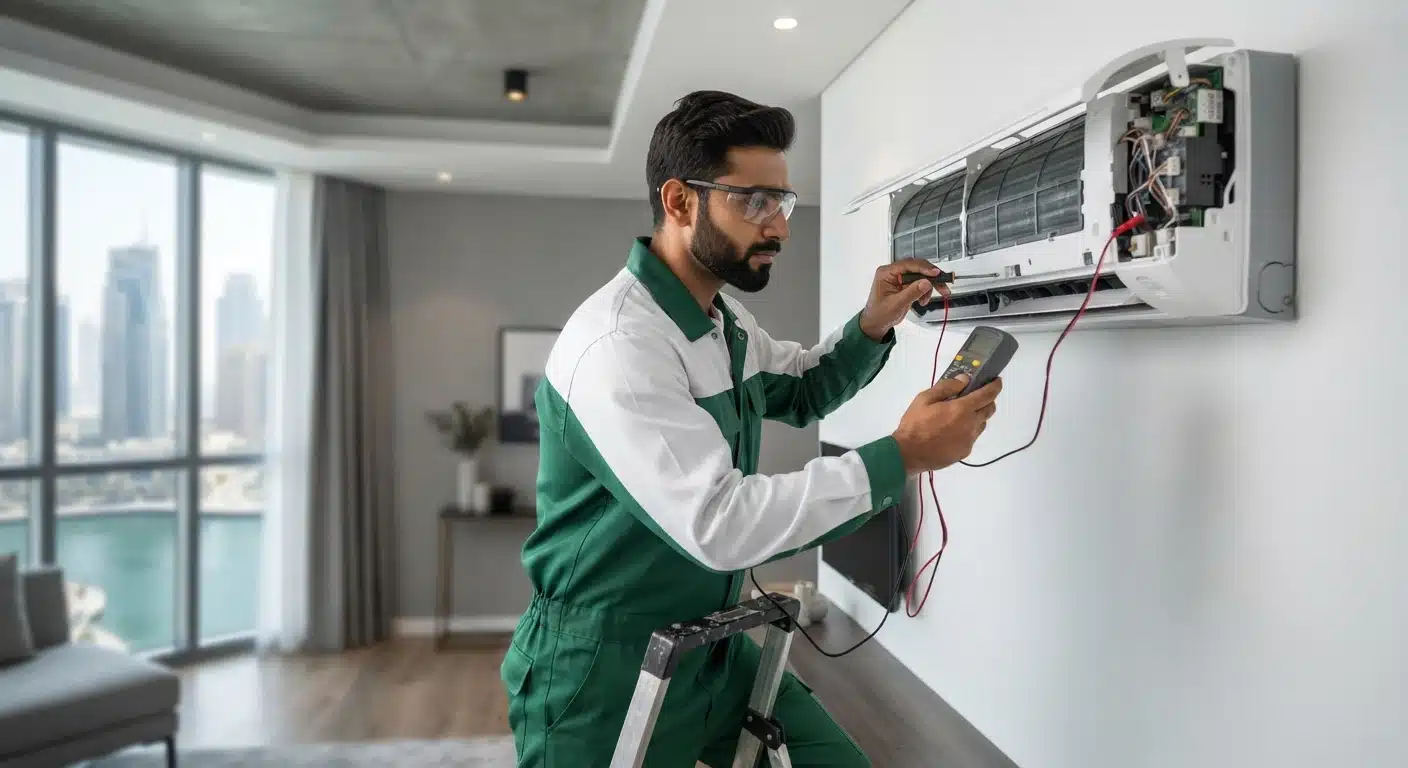
It always seems to happen at the worst possible time. You walk in after a long day, reach for the thermostat, and realize the air coming out isn’t cold anymore. In Dubai, in the middle of summer, that’s not a small inconvenience. It’s a real problem, and it tends to get worse fast.
Whether you’re in a high-rise apartment in Dubai Marina, a villa in Arabian Ranches, or anywhere in between, AC repair in Dubai becomes one of the most searched, most urgent needs the moment temperatures climb past 40°C. And honestly, that makes sense. An AC that’s struggling in June won’t magically fix itself in July.
The good news is that a lot of AC issues give off warning signs before a full breakdown, and a few of them you can actually check yourself before picking up the phone. This guide walks you through exactly what to do, step by step, so you’re not left guessing in the heat.
Why AC Problems Escalate So Quickly in Dubai
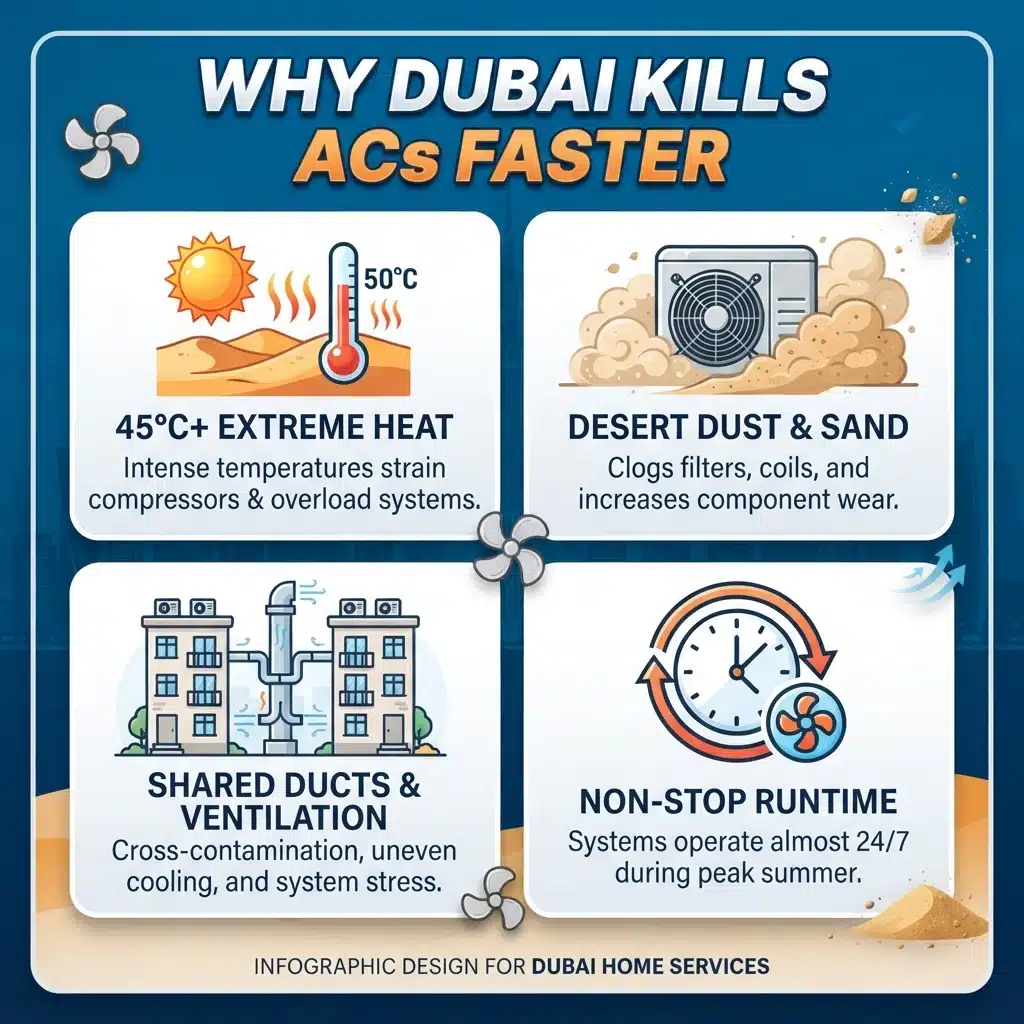
Air conditioning in the UAE isn’t a luxury; it’s closer to a basic utility, and the systems here work harder than almost anywhere else in the world. A few reasons AC issues in Dubai tend to snowball faster than in other climates:
● Units run almost non-stop for months at a time, especially between May and September, which puts constant strain on compressors, fans, and refrigerant lines.
● Dust and sand from the surrounding desert environment build up in filters and coils faster than most people expect, restricting airflow and forcing the system to overwork.
● High-rise central AC systems share ductwork and drainage across multiple units, so a small blockage can affect cooling in ways that aren’t always obvious.
● Villas with older or larger duct systems often develop leaks or airflow imbalances that go unnoticed until one room is noticeably hotter than the rest of the house.
None of this means your AC is destined to fail; it just means small issues don’t stay small for long here. Catching them early makes a real difference.
The Checklist: What to Check Before You Call for AC Repair
Before assuming the worst, run through this quick checklist. A few of these take less than five minutes and occasionally solve the issue on the spot.
1. Check the thermostat settings
It sounds obvious, but a thermostat accidentally set to “fan only” or bumped to a higher temperature is more common than you’d think, especially in homes with kids or shared households.
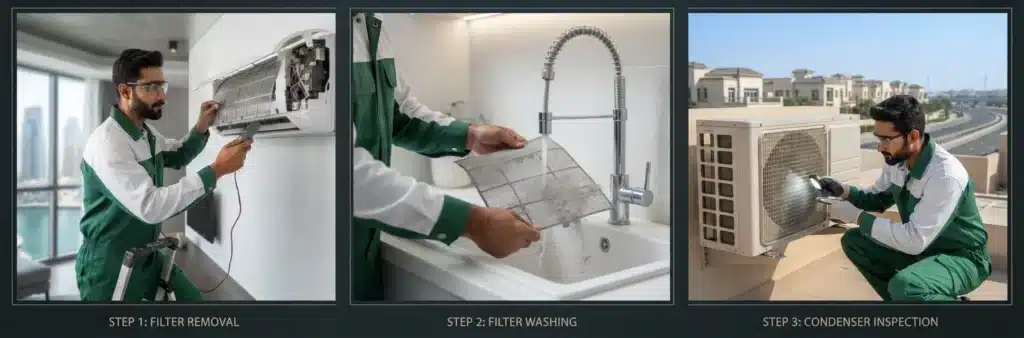
2. Inspect and clean the air filter
A clogged filter is one of the single biggest causes of weak cooling. If it hasn’t been cleaned in over a month, especially during peak summer, this alone could be your answer.
3. Look at the outdoor unit
Check whether the condenser unit is blocked by dust, leaves, or debris. Restricted airflow around the outdoor unit makes the whole system work harder and cool less effectively.
4. Check the circuit breaker or DB panel
If the AC isn’t turning on at all, a tripped breaker is worth ruling out before assuming there’s a bigger mechanical fault. If the breaker itself looks damaged, that’s an electrical issue, not an AC one.
5. Listen for unusual sounds
Grinding, clicking, or a loud rattling noise usually points to something mechanical, such as a failing fan motor or a loose part, and it isn’t something to ignore.
6. Check for water pooling near the indoor unit
This often indicates a blocked condensate drain line, a common, fixable issue. If water has already spread, see our guide on spotting hidden water leaks.
7. Notice if cooling is inconsistent between rooms
One room significantly warmer than others can indicate a duct issue, an airflow imbalance, or a system that’s simply undersized for the space.
8. Check how old the unit is
If your system is more than 8–10 years old and issues are becoming frequent, you may be looking at a bigger underlying problem rather than a one-off fault.
If you’ve gone through this list and the issue is still there or the answer clearly points to something mechanical, that’s your sign to bring in a professional rather than keep troubleshooting.
What You Can Safely Handle Yourself
A few of the checks above double as genuine fixes. It’s worth trying these before booking a callout:
● Cleaning or replacing a dirty air filter
● Clearing visible debris around the outdoor condenser unit
● Resetting a tripped breaker (once; safely if it trips again immediately, stop and call a professional)
● Adjusting thermostat settings back to normal cooling mode
These are low-risk, low-cost fixes that solve a surprising number of “my AC isn’t cooling” complaints.
When It's Time to Call a Professional
Some AC issues aren’t just inconvenient to fix yourself; they’re genuinely risky, or they require tools and refrigerant handling that aren’t something to attempt at home. Call in a professional if:
● The system is low on refrigerant (gas); this requires certified handling and certified technicians under UAE regulations; a DIY refill risks compressor damage and voids most manufacturer warranties.
● You hear grinding, buzzing, or mechanical noises from the compressor
● The breaker trips repeatedly, even after resetting it once
● There’s visible water damage or persistent leaking near the indoor unit
● The unit is blowing air, but it’s not actually cold, even after cleaning the filter
● Cooling has been gradually getting worse over several weeks, not just a sudden issue. Lorem ipsum dolor sit amet, consectetur adipiscing elit. Ut elit tellus, luctus nec ullamcorper mattis, pulvinar dapibus leo.
Trying to force a fix on any of these usually leads to a bigger repair bill later or, in some cases, a compressor replacement that could have been avoided with an earlier, smaller repair.
Dubai Summer AC Survival Checklist (PDF)
Why Homeowners and Tenants Across Dubai Trust Us for AC Repair
We’ve been the ones called in after a “quick DIY fix” made things worse, and we’ve also been the ones called in early, when a small service prevented a full breakdown two weeks later. That contrast is exactly why we take every AC callout seriously, no matter how minor it sounds on the phone.
Here’s what that looks like when you book with us:
- Technicians who actually understand Dubai’s AC systems, from villa ducting in Arabian Ranches to high-rise central units in JBR and Business Bay
- A clear, upfront quote before any work begins, no surprise charges once the technician is already at your door
- Fast response, especially during peak summer because we know a broken AC in July isn’t something that can wait until next week
- Repairs that address the actual cause, not just a quick patch that has you calling again in a month
It’s the reason we’re consistently mentioned among the best home repair services in Dubai, particularly when it comes to AC repair and servicing during the hottest months of the year.
